
Emergency Home Preparedness Tips Every Household Should Know
- Jul 22
- 9 min read
The first time the power goes out in a home you own, the question is not just where the flashlight is. It is whether the sump pump has backup power, whether the garage door can open manually, whether the water shutoff valve works, and whether everyone knows what to do next.
Owning a home changes the emergency checklist. In a rental, a landlord or property manager often handles major systems. In a house, those systems become part of the household’s safety plan. That does not mean preparing has to be expensive or complicated. The best plans are simple, visible, and easy to repeat.
This guide covers practical Emergency Home Preparedness steps that fit real life: busy schedules, shared responsibilities, tight move-in budgets, kids, pets, and the long list of tasks that come with a first home.

Start with the risks most likely to affect your home
A good emergency plan starts with your actual home, not a generic disaster list. A house in a wildfire-prone area needs different supplies than a home in a flood zone, tornado region, hurricane path, or place with winter ice storms.
Start with three questions:
What weather events happen most often in this area?
What home systems would cause the biggest problem if they failed?
What would make it hard to leave or stay safely for 24 to 72 hours?
For many households, the most common disruptions are power outages, heavy storms, extreme heat or cold, plumbing leaks, smoke, and blocked roads. These are not dramatic, but they can become stressful fast.
Walk through the property and make a short risk list. Look at:
Low spots where water pools after rain
Large trees near the roof, driveway, or power lines
Gutters that overflow
Basement dampness or sump pump reliability
Older outlets, flickering lights, or warm switch plates
Loose railings, uneven steps, or poor outdoor lighting
Space heaters, fireplaces, grills, and other fire risks
If the home inspection report is still available, use it. That report can help identify items that are not urgent on closing day but matter during an emergency, such as aging water heaters, missing GFCI outlets, or poor grading near the foundation.
Build a home emergency kit that fits your household
A home emergency kit should cover the basics first: water, food, light, communication, first aid, warmth, sanitation, and key documents. Think of it as a buffer that buys time when stores are closed, roads are unsafe, or help is delayed.
A good starting point is enough supplies for at least three days. Store items in a sturdy bin, closet shelf, or interior location that everyone can reach.
Category | What to include |
Water | One gallon per person per day for drinking and basic hygiene |
Food | Shelf-stable meals, manual can opener, snacks, baby food if needed |
Light | Flashlights, headlamps, extra batteries, battery lanterns |
Communication | Battery or hand-crank radio, phone power banks, charging cords |
First aid | Bandages, antiseptic wipes, gauze, gloves, pain reliever, thermometer |
Personal needs | Prescription medication copies, glasses, hygiene items, diapers |
Warmth | Blankets, extra socks, gloves, emergency blankets |
Tools | Multi-tool, duct tape, work gloves, whistle, wrench or pliers |
Sanitation | Trash bags, paper towels, disinfecting wipes, hand sanitizer |
Documents | Copies of IDs, insurance policies, home documents, emergency contacts |
Keep the kit realistic. If nobody in the home will eat a certain canned meal on a normal day, it will not be useful during a stressful night without power. Choose foods your household already likes, then rotate them into regular meals before they expire.
For families with young children, add comfort items. A favorite small toy, card game, coloring book, or spare pacifier can help lower stress. For pets, include food, a leash, waste bags, medication, and a copy of vaccination records.
Tip: Set a calendar reminder to check the kit twice a year. Pair it with changing smoke alarm batteries or the start and end of daylight saving time.
Learn where your shutoff valves and panels are
One of the biggest differences between renting and owning is knowing how to stop damage before it spreads. A burst pipe, gas smell, or electrical issue can become much worse if nobody knows where the controls are.
Every adult in the home should know the location of:
Main water shutoff valve
Gas shutoff valve, if the home has natural gas or propane
Electrical panel
Sump pump and backup battery, if present
Water heater shutoff
Furnace switch
Main sewer cleanout, if visible and accessible
Outdoor hose bib shutoffs in cold climates
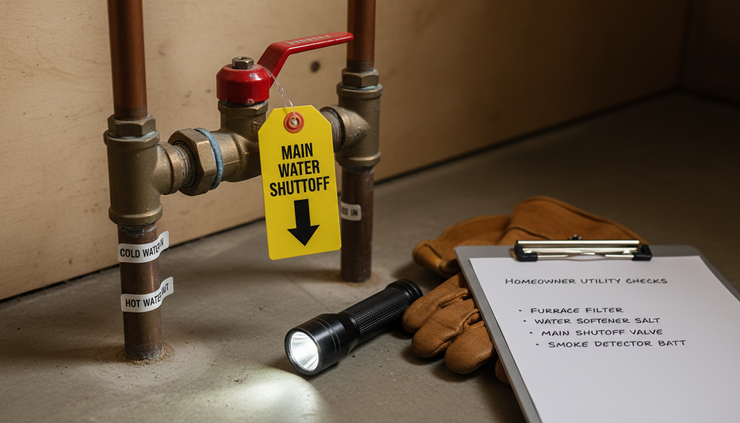
Do not wait for an emergency to find these. Walk the home when everything is calm. Put a bright tag on the main water shutoff and label the electrical panel clearly.
For the electrical panel, avoid vague labels like “room” or “lights.” Use specific labels such as `upstairs hallway lights`, `kitchen outlets`, or `garage freezer`. Clear labels save time when something trips or when a repair person needs access.
If you smell gas, leave the home and call the gas company or emergency services from outside. Do not flip switches, light matches, or try to investigate the source indoors.
Make a simple communication plan
During an emergency, people rarely think as clearly as they expect. A written plan reduces guesswork.
Keep the plan short enough to fit on one page. Print it and store it in the emergency kit, near the fridge, and in a shared digital folder.
Include:
Household phone numbers
An out-of-town contact
Local emergency numbers
Nearest urgent care and hospital
Insurance company and policy number
Veterinarian contact, if needed
School, daycare, or caregiver contacts
A meeting place near the home
A second meeting place outside the neighborhood
An out-of-town contact is useful because local cell networks may be strained during a regional emergency. Sometimes a text to someone outside the area goes through more easily than a local call.
For households with kids, keep the language clear. Choose simple meeting spots, such as the mailbox, a neighbor’s porch, or a specific tree across the street. Practice without making it scary. A quick “What would we do if the smoke alarm went off?” talk can build confidence.
For newly married couples or housemates, talk through who handles what. One person may grab the emergency bin. Another may get pets ready. Another may check on a neighbor. Clear roles help avoid confusion.
Prepare for power outages before they happen
Power outages are among the most common home disruptions. They can affect heating, cooling, refrigeration, internet, garage doors, medical devices, sump pumps, and well pumps.
Start with the basics:
Keep flashlights in predictable places.
Store batteries outside devices to prevent corrosion.
Charge power banks before storms.
Know how to open the garage door manually.
Keep the car’s gas tank at least partly full before major weather.
Avoid opening the fridge and freezer more than needed.
Use battery-powered lanterns instead of candles when possible.
If the home has a sump pump, ask whether it has a battery backup. If the home uses a well, learn what happens when the power goes out. If anyone relies on powered medical equipment, create a backup plan with a qualified provider.
Portable generators can be useful, but they require strict safety habits. Use them outdoors, far from doors, windows, and vents. Never run a generator in a garage, basement, enclosed porch, or near open windows. Carbon monoxide is invisible and can be deadly.
Install carbon monoxide alarms on every level of the home, especially near sleeping areas. Test them along with smoke alarms.
Reduce fire risk with routine habits
Fire safety is one of the most important parts of home preparedness. It is also one of the easiest to overlook after move-in.
Start with alarms. Place smoke alarms inside bedrooms, outside sleeping areas, and on every level of the home, including the basement. Test them monthly and replace batteries as needed. Follow the manufacturer’s guidance for alarm replacement, since sensors do not last forever.
Add fire extinguishers in practical locations:
Kitchen
Garage
Laundry area
Near fireplaces or wood stoves
Workshop or utility room
Choose extinguishers rated for common household fires and learn how to use them before you need them. Many local fire departments offer guidance or can point residents to basic training resources.
Also check daily habits:
Keep space heaters away from bedding, curtains, and furniture.
Clean dryer lint traps after each load.
Do not overload outlets or extension cords.
Keep grills away from siding and deck railings.
Store gasoline, propane, and solvents safely outside living spaces.
Let ashes from fireplaces or fire pits cool fully in a metal container.
A safe exit plan matters just as much as prevention. Identify two ways out of each sleeping area when possible. If bedrooms are upstairs, look into escape ladders designed for that purpose. Pick a meeting place outside where everyone gathers after leaving the home.

Protect important documents and account access
Emergencies often create paperwork problems. Insurance claims, temporary housing, medical needs, and repairs all move faster when important information is easy to find.
Store paper copies of key documents in a waterproof and fire-resistant container if possible. Keep digital copies in a secure cloud account or encrypted drive.
Important documents may include:
Homeowners insurance policy
Mortgage servicer contact information
IDs and passports
Birth certificates and marriage certificate
Pet records
Medication lists
Home inventory photos or videos
Recent photos of major appliances and serial numbers
Contractor and utility contacts
Deed or closing documents, if available
A home inventory is especially useful. Walk through each room and record a slow video. Open closets, cabinets, and drawers. Capture electronics, furniture, tools, appliances, jewelry, bikes, and outdoor equipment. You do not need a perfect catalog on day one. A clear video is better than relying on memory after damage.
Review insurance coverage before storm season. Understand deductibles, exclusions, and whether flood or earthquake coverage is separate. Standard homeowners insurance does not cover every type of disaster. If a home is in a higher-risk area, ask an insurance professional what coverage applies.
Keep go-bags ready for a fast exit
A home kit helps when staying put is safest. A go-bag helps when leaving quickly is the better choice.
Each person’s bag should be light enough to carry and easy to grab. A backpack works well. Store bags near an exit, in a coat closet, or in a bedroom closet.
Pack basics such as:
Water bottle
Shelf-stable snacks
Change of clothes
Phone charger
Small first aid kit
Copies of key documents
Cash in small bills
Flashlight or headlamp
Basic hygiene items
N95 or similar masks
Comfort item for children
Pet supplies, if needed
For babies or toddlers, rotate diaper sizes, wipes, formula, and spare clothes often. For pets, keep a carrier accessible. A carrier buried behind holiday decorations will not help during a fast evacuation.
If evacuation is possible due to hurricanes, wildfires, or floods, keep the car ready during high-risk periods. Know at least two routes out of the neighborhood. Roads that feel reliable on a normal day can close quickly during flooding, fallen trees, or heavy traffic.
Add preparedness to regular home maintenance
Preparedness works best when it becomes part of normal home care. A homeowner does not need to do everything at once. Build the habit in small steps.
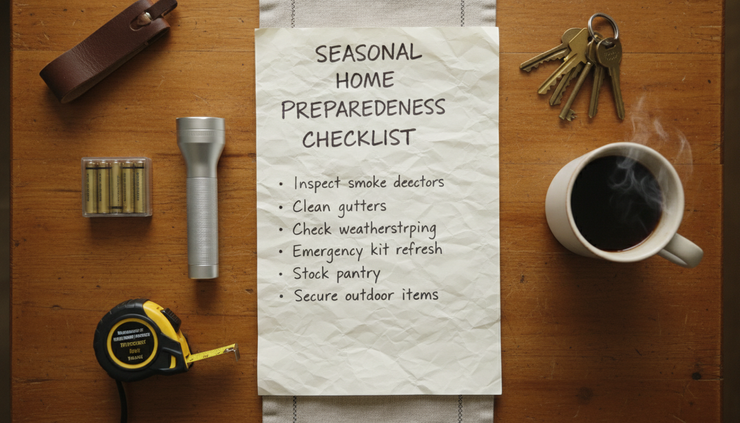
A seasonal schedule helps:
Season | Home preparedness tasks |
Spring | Clean gutters, check grading, test sump pump, review severe weather plan |
Summer | Prepare for heat, trim risky branches, check fire extinguishers |
Fall | Service heating system, clean dryer vent, inspect chimney if used |
Winter | Protect pipes, stock ice melt, check blankets and backup heat plans |
Some tasks are worth hiring out, especially electrical work, chimney service, tree removal, roof repairs, and generator transfer switch installation. DIY confidence is useful, but emergency safety is not the place to guess.
Keep a small home maintenance fund when possible. Even a modest cushion can reduce stress when a storm damages a fence, a pipe leaks, or a heater fails during a cold snap.
Talk to neighbors before you need help
Neighborhood connections matter during emergencies. A nearby person may notice a fallen tree, check on a pet, lend a tool, or share local information before official updates arrive.
You do not need to become best friends with everyone on the block. Start small:
Exchange numbers with one or two trusted neighbors.
Ask who has useful tools, such as a wet-dry vacuum or chainsaw.
Share any needs that matter in an emergency, such as pets or mobility limits.
Learn whether the neighborhood has a community alert system.
Offer help when safe to do so.
For growing families, this network can be especially helpful. A neighbor who knows your household may be able to assist if a storm hits while one adult is commuting or kids are at school.
Local emergency alerts are useful too. Sign up for city, county, or state notifications where available. Weather radio alerts can also help when cell service is unreliable or phones are silenced overnight.
Practice the plan in small, low-stress ways
A plan that never gets used is easy to forget. Practice does not need to feel intense. Keep it short and practical.
Try these simple drills:
Turn off the lights and find flashlights without using phone lights.
Locate the main water shutoff and explain when to use it.
Walk the fire escape route from each bedroom.
Time how long it takes to gather pets and go-bags.
Test smoke and carbon monoxide alarms.
Review who to call if household members are separated.
After each practice, fix one weak spot. Maybe the flashlight batteries are dead. Maybe the go-bag is too heavy. Maybe the emergency contact list is outdated. Small corrections build a much stronger plan over time.
Make preparedness part of feeling at home
A first home comes with paint colors, furniture choices, mortgage paperwork, and plenty of weekend projects. Safety planning belongs on that list. It is one of the most practical ways to protect the people, pets, and property inside the walls.
Start with one step this week. Find the water shutoff. Buy two flashlights. Print the emergency contact list. Put bottled water and shelf-stable food in a bin. Then build from there.
A prepared household is not one that expects the worst every day. It is one that can handle a hard moment with less panic, fewer delays, and a clearer path forward.


